Facial Swelling
Facial swelling has many causes — from dental abscess and jaw cysts to tumours and salivary gland disease. Some are urgent emergencies; others require planned investigation. Understanding the cause is the first step to the right treatment.
Warning Signs Requiring Emergency Care
- Rapidly progressive swelling (hours to a day)
- Difficulty breathing or swallowing
- Inability to open the mouth (trismus)
- High fever with neck swelling
- Swelling extending to the neck or floor of mouth
- Confusion, drowsiness, or altered consciousness
- Inability to swallow saliva
Common Causes of Facial Swelling
Dental Abscess / Odontogenic Infection
UrgentThe most common cause of facial swelling. Bacterial infection spreading from a decayed tooth or periodontal disease into the surrounding soft tissues. Can progress rapidly to Ludwig's angina — a life-threatening deep neck space infection causing airway compromise.
Jaw Cyst
InvestigateSlowly enlarging fluid-filled cyst in the jawbone (dentigerous cyst, odontogenic keratocyst). Causes painless swelling over weeks to months. Diagnosed on OPG X-ray. Requires surgical removal to prevent progressive bone destruction.
Jaw Tumor
InvestigateBenign jaw tumors (ameloblastoma, myxoma) or malignant tumors (osteosarcoma, carcinoma) can present as gradually enlarging facial or jaw swelling. Any persistent swelling without an obvious dental cause must be investigated with imaging and biopsy.
Salivary Gland Obstruction
InvestigateA salivary stone (sialolith) blocking the submandibular or parotid duct causes intermittent swelling and pain — typically worse at mealtimes when saliva production increases. Diagnosed on ultrasound. Treated by stone removal or gland excision.
Lymph Node Enlargement
InvestigateEnlarged lymph nodes in the neck or face may result from reactive infection, lymphoma, or metastatic cancer from an oral primary. A firm, non-tender, persistent lymph node enlargement lasting more than 3 weeks requires specialist evaluation.
Parotid Gland Tumour
InvestigateA swelling in front of or below the ear is often a parotid gland tumor — most commonly a pleomorphic adenoma (benign) or mucoepidermoid carcinoma (malignant). Facial nerve involvement causing weakness suggests malignancy and requires urgent assessment.
Frequently Asked Questions
Representative Cases
Selected cases managed by Dr. Abhisek Chatterjee. All images used with patient consent.
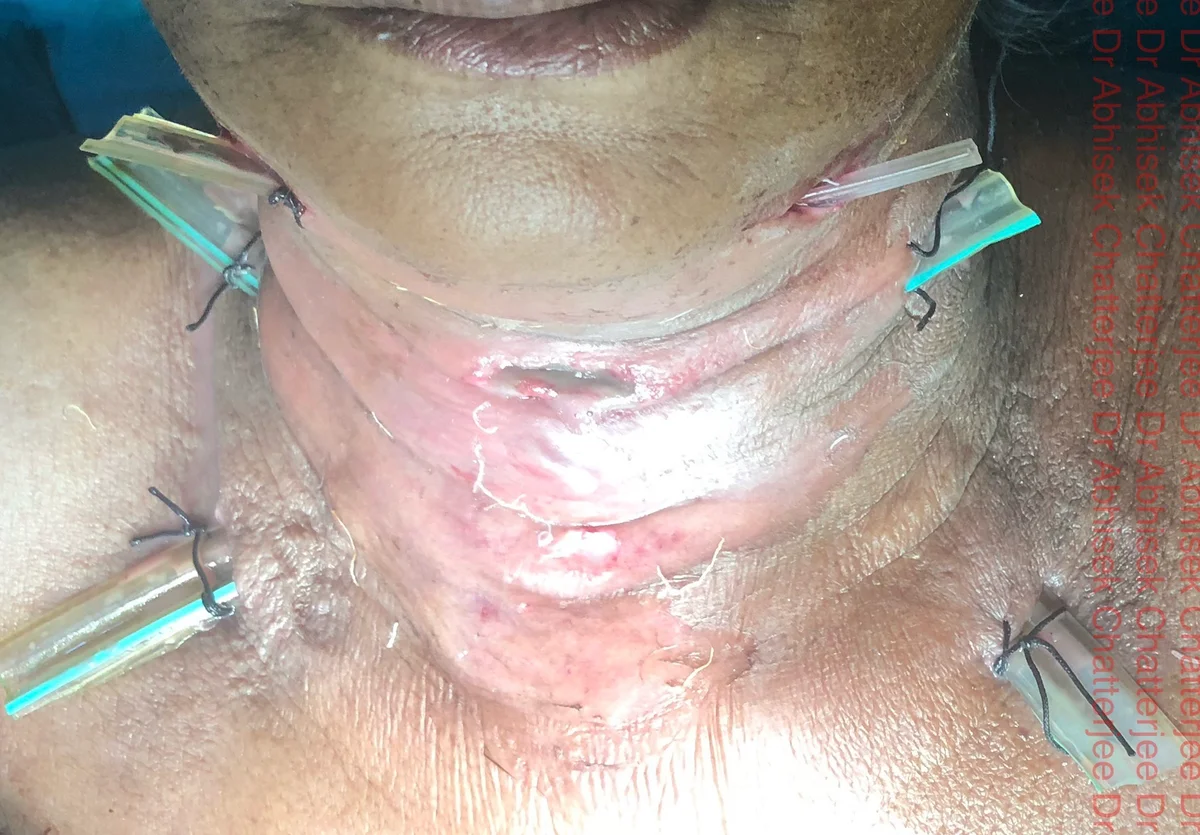
Deep Neck Space Infection — Surgical Drainage


Facial Swelling? Get Expert Evaluation
Dr. Abhisek Chatterjee manages facial swelling from dental infections to jaw tumours at The Maxillofacial Clinic and Asha Nursing Home, Rampurhat.